
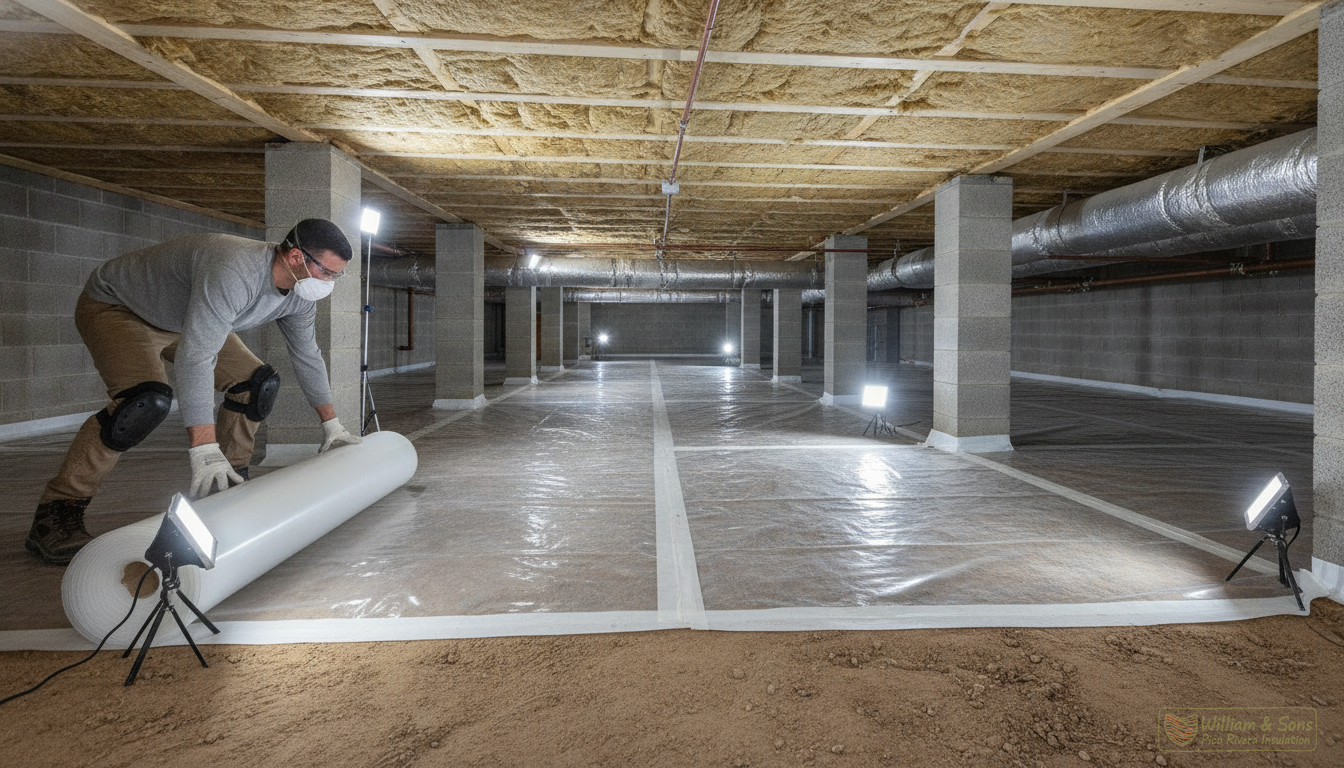
Most Pico Rivera homeowners think of insulation as something that lives in the attic. And while attic insulation is critically important, there's another area of your home that quietly causes just as many problems when it's ignored: the crawl space. A poorly insulated, unprotected crawl space can be the source of musty odors rising into your living room, cold and uncomfortable tile floors in winter, elevated indoor humidity, and even hidden structural wood damage developing right beneath your feet. The good news is that all of these problems are preventable with the right combination of insulation and moisture control.
Why Crawl Spaces Are a Bigger Problem Than Most Homeowners Realize
Southern California's climate is generally mild, but Pico Rivera sits in a region where ground moisture remains a consistent issue. Even in dry seasons, soil beneath homes retains moisture that migrates upward as water vapor. In a vented crawl space—which describes the majority of older homes in Pico Rivera and nearby communities like Santa Fe Springs and Montebello Hills—this moisture-laden air flows through the space, contacts cooler structural wood and pipes, and condenses. Over time, that condensation promotes mold growth, wood rot, and pest activity.
Meanwhile, the insulation between your floor joists—if there is any—degrades quickly when exposed to this environment. Fiberglass batts that get wet lose most of their R-value, sag out of the bays they were installed in, and become a home for insects and rodents. What started as a minor insulation deficiency becomes an active structural and health problem.
Signs Your Crawl Space Needs Attention
- A musty or earthy smell inside your home, particularly in rooms closest to the foundation
- Cold floors in winter even with the heat running
- Visible mold on baseboards, floor joists, or sub-floor sheathing
- Sagging or drooping batts visible in the crawl space
- Evidence of rodent activity—droppings, nesting material, or chewed insulation
- High indoor humidity readings despite adequate ventilation
- Condensation on water pipes or HVAC ducts in the crawl space
If you're seeing any of these signs, it's time for a professional crawl space inspection. Our team at William & Sons Pico Rivera Insulation inspects every inch of the foundation area before recommending any work—because the right solution depends entirely on what's actually happening down there.
The Two Primary Approaches to Crawl Space Insulation
There are two fundamentally different strategies for insulating a crawl space, and the right one depends on whether your crawl space is vented or sealed.
Insulation Between the Floor Joists (Vented Crawl Space)
In a traditional vented crawl space, the goal is to insulate the floor above the crawl space—the underside of your home's living area—so that conditioned air stays in the house and the crawl space itself remains a passively ventilated exterior zone. This is done by installing fiberglass batt insulation between the floor joists with the facing toward the living space above. The challenge with this approach is that it does nothing to address the moisture problem in the crawl space itself, and insulation installed here is continuously exposed to that moist environment.
Foundation Wall Insulation and Encapsulation (Sealed Crawl Space)
The superior long-term approach is to convert the crawl space into a sealed, conditioned—or at minimum semi-conditioned—zone by insulating the foundation walls and rim joists and installing a continuous heavy-duty vapor barrier across the entire ground surface. This approach, sometimes called crawl space encapsulation, eliminates the source of the moisture problem rather than just managing its effects. Sealing the crawl space also eliminates a major pathway for outdoor air to infiltrate your home from below.
Our crawl space insulation service covers both approaches, and we'll help you determine which strategy is appropriate given your home's existing configuration and California building code requirements.
The Role of Vapor Barriers
California building code generally requires a ground vapor barrier in crawl spaces, and with good reason. A properly installed vapor barrier—typically heavy-duty polyethylene sheeting ranging from 10 to 20 mil thickness—physically blocks ground moisture from evaporating into the crawl space air. Without one, no amount of insulation will fully solve moisture-related problems in your foundation area.
For full encapsulation projects, we extend the vapor barrier up the foundation walls and overlap seams carefully to create a continuous sealed membrane. This is combined with foam insulation on the foundation walls to complete the thermal and moisture envelope. See how spray foam insulation plays a critical role in sealing rim joists and sill plates as part of this complete encapsulation approach.
Don't Forget the Rim Joists
One of the most overlooked air leakage points in any home is the rim joist—the band of framing that runs around the perimeter of your foundation at floor level. Rim joists are typically exposed to the exterior on one side and the crawl space environment on the other, and they're often uninsulated or insulated with small batt pieces that don't seal against air movement at all. Spray foam is the ideal material for rim joists because it simultaneously seals every gap and provides a high R-value in a compact application. Our team addresses rim joists as a standard part of any comprehensive crawl space project.
What Happens to Old Insulation That's Already in the Crawl Space?
If you have existing crawl space insulation that has been damaged by moisture, soiled by pests, or has simply fallen out of the bays it was installed in, it needs to come out before new material goes in. Our insulation removal service handles this extraction cleanly, disposing of all waste material properly. After the space is cleared, we inspect the structural wood for signs of rot or mold damage that should be addressed by a qualified contractor before insulation is reinstalled.
How Crawl Space Insulation Connects to Whole-Home Efficiency
Your crawl space doesn't exist in isolation—it's part of your home's complete building envelope. Cold, damp, poorly insulated crawl spaces affect indoor air quality, HVAC efficiency, and structural longevity simultaneously. The most effective whole-home approach combines:
- Proper crawl space insulation and vapor control at the foundation level
- Comprehensive air sealing throughout the home's envelope
- Adequate attic insulation at the top of the thermal envelope
Together, these three improvements address the home from foundation to roofline and deliver the kind of whole-system results that individual point improvements rarely achieve on their own.
Serving Pico Rivera and the Greater Southeast Los Angeles Area
William & Sons Pico Rivera Insulation is based in Pico Rivera and serves homeowners throughout the area, including Downey, Montebello, Bell Gardens, and Santa Fe Springs. We're available seven days a week from 8:00 AM to 6:00 PM.
If you're concerned about what's happening in your crawl space, the first step is a professional inspection. Call us at (562) 784-5669, email [email protected], or visit us at 9141 Slauson Ave, Unit C, Pico Rivera, CA 90660 to schedule your free assessment. Our Pico Rivera crawl space insulation team will give you an honest evaluation and a clear plan—no surprises, no pressure.